Tag Archives: God’s Names

Do You Have Free Will?

Is everything predetermined or does a person have complete free will? Are we truly in control of our lives, or is it our spiritual and genetic predispositions? Find out in this class where we also discuss time travel and the “grandfather paradox”, nature vs. nurture, and if there is a “religion gene” that makes some people have more faith.

For more, see ‘Time, Gravity, and Free Will‘.
See also ‘Time Travel in the Torah‘. 

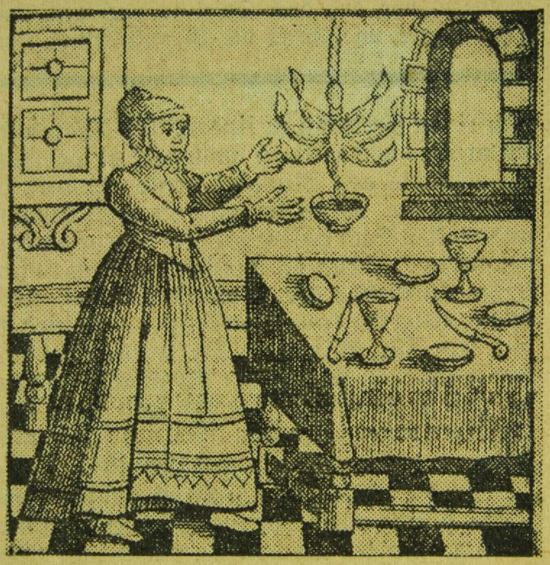
Origins and Mysteries of Shabbat Candles

1723 Illustration of Shabbat Candle-Lighting

This week’s parasha, Tetzave, begins with the command to take “pure olive oil, crushed for lighting, to kindle the lamps continually.” (Exodus 27:20) This refers to lighting the “eternal flame”, ner tamid, of the Temple Menorah. Since the destruction of the Temple, we are no longer able to fulfil this mitzvah exactly. However, the Sages say we can still fulfil this mitzvah through the lighting of Shabbat candles. The Ba’al HaTurim (Rabbi Yakov ben Asher, 1269-1343) presents some mathematical proof for this as well: the gematria of ner tamid (נר תמיד) is 704, equal to “on the Sabbath” (בשבת), while the gematria of tetzave (תצוה) is 501, equal to “[God] commanded the women” (נשים צוה). In other words, God commanded women to light Shabbat candles as a way to keep the Temple’s eternal flame going.

This beautiful teaching actually helps us pinpoint the origins of lighting Shabbat candles, since the mitzvah is not explicitly mentioned anywhere in the Torah. Where exactly did it come from, why was it instituted, and why is it women specifically that are instructed to light these candles? Continue reading

Secrets of God’s Ineffable Name

In this week’s parasha, Shemot, God first reveals Himself to Moses. He introduces Himself thus: “I am the God of your forefathers; the God of Abraham, the God of Isaac, and the God of Jacob.” (Exodus 3:6) Later on in the conversation, Moses asks God how he should tell the Children of Israel about God, and what name should he use in referring to God? God replies that He is Ehyeh Asher Ehyeh, “I will be what I will be”. The simple meaning here is that God is trying to convey that He is not some idol or pagan deity. He has no shape or form; he has no location. He is everywhere and imbues everything. He is everything. He will be whatever He needs to be; wherever, whenever. Only after that introduction, God says:

Thus shall you say to the children of Israel: YHWH, the God of your fathers; the God of Abraham, the God of Isaac, and the God of Jacob, has sent me to you; this is My name for ever, and this is My memorial unto all generations. (Exodus 3:15)

God reveals His eternal name: YHWH (יהוה), a term so holy and powerful it is not uttered. It is referred to as God’s “Ineffable” Name, or just the Tetragrammaton (literally the “four-letter” name), and by Jews as Hashem (“The Name”), or Adonai (“My Lord”) in prayers or Torah readings. Some Jews refer to it by rearranging the letters and saying Havaya. (Some non-Jews have transliterated it into English as “Jehovah”.) Whatever the appellation, this name of God carries infinite depths of meaning. Several of these will be explored below. Continue reading